Remote Contrast Coverage vs Locum Radiologists: Cost Variability & Compliance
Key TakeawaysRemote contrast supervision lets a radiologist oversee contrast administration in real time through a
Press Release Disclaimer: This is a press release distributed through the XPR Media network. It has not been independently verified by our newsroom.

Key Takeaways
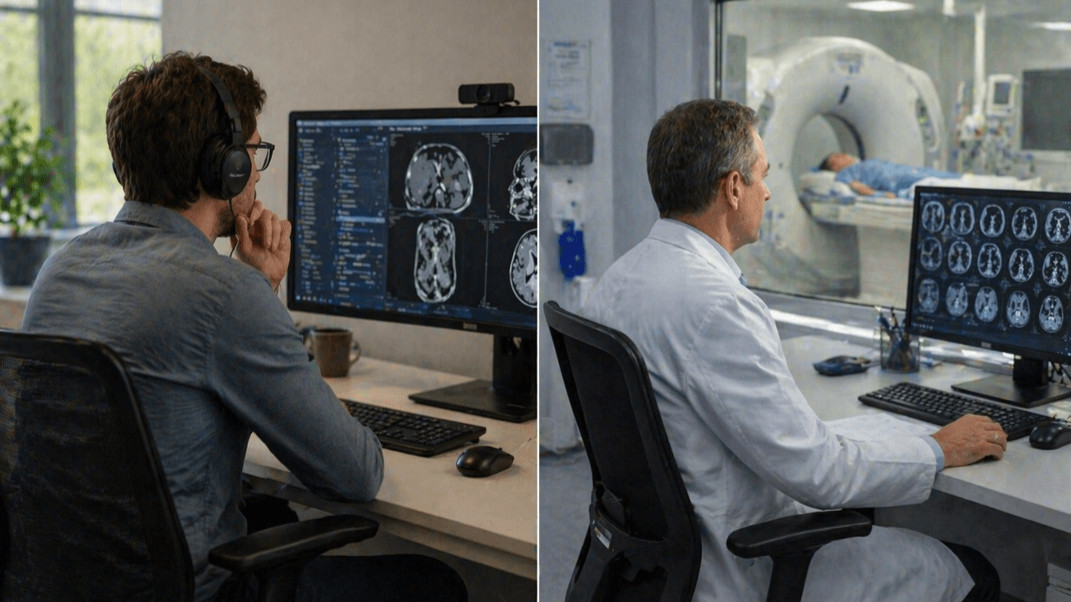
- Remote contrast supervision lets a radiologist oversee contrast administration in real time through a secure two-way audiovisual platform, while locum tenens coverage typically brings a temporary radiologist on-site, though some hybrid locum setups skip real-time contrast supervision entirely.
- Staffing agencies commonly add a 30-50% markup on top of a locum radiologist’s base pay, and that figure doesn’t even include travel, credentialing, or possible tail malpractice coverage.
- CMS’s permanent 2026 virtual direct supervision policy requires real-time, two-way audio and video technology for eligible diagnostic tests, but state licensure and local rules still apply on top of the federal baseline.
- Audit documentation looks very different between the two models: one relies on automated, timestamped platform records, and the other depends on manually maintained credentialing files and shift logs.
- Operations directors weighing remote contrast coverage against locum staffing need to compare fixed versus variable costs alongside each model’s distinct compliance duties before deciding which fits their facility best.
Outpatient imaging centers run on a simple promise: a radiologist must be available whenever contrast goes into a patient’s vein. How that promise gets kept, though, looks very different depending on the staffing model a facility chooses. Some centers rely on a radiologist watching over the procedure through a screen, while others bring in a traveling physician to stand in the room. Both approaches can satisfy supervision rules, but they pull on cost, flexibility, and compliance in opposite directions.
Two Models, One Supervision Mandate
Every contrast study, regardless of how it’s staffed, has to meet the same underlying supervision mandate. A qualified radiologist must be immediately available to step in if something goes wrong, whether that availability comes from someone standing a few feet away or from someone connected through a secure video link. The mandate doesn’t bend for convenience; it only changes shape based on the delivery method.
That shared starting point is exactly why remote contrast coverage and locum radiologist coverage get compared so often. Operations directors aren’t choosing between a compliant option and a risky one. They are choosing between two different ways of meeting the same federal and state obligations, each with its own cost structure, scheduling flexibility, and documentation burden. ContrastConnect and other experts say that these two paths diverge once a facility looks past the surface-level similarity of meeting the same supervision rule.
How Each Coverage Model Actually Works
Before comparing dollars and compliance checklists, it helps to understand the mechanics behind each model. The two approaches handle the same clinical moment, contrast injection, in fundamentally different ways.
Remote Contrast Supervision in Practice
Remote contrast supervision allows an on-site technologist to administer contrast while a radiologist supervises in real time through a secure, two-way audiovisual platform. The radiologist doesn’t need to be anywhere near the building. What matters is that the connection stays live, bidirectional, and stable enough to let the radiologist see, hear, and respond to whatever happens during the study.
This setup depends heavily on the technology behind it. The platform has to support real-time audio and video, stay encrypted to protect patient information, and hold a reliable connection for the full length of the procedure. A dropped connection during contrast administration isn’t a minor inconvenience; it creates a compliance and safety problem. Well-built remote supervision systems include redundancy measures designed to keep the link alive even if a facility’s internet connection wavers.
Locum Radiologist Arrangements Explained
Locum radiologist coverage typically brings a temporary, traveling radiologist on-site to provide direct, in-person supervision for a set shift or contract period. This is the traditional model many imaging centers have leaned on for decades when a staff radiologist is out or when patient volume outpaces in-house coverage.
Not every locum arrangement looks the same. Some newer hybrid setups have locums reading images remotely without providing the real-time contrast supervision that a dedicated platform delivers. Health systems running several outpatient sites in one region have also started blending on-site and remote radiologist coverage, letting the same pool of radiologists supervise contrast administration across multiple locations instead of being tied to a single building.
Where Staffing Costs Diverge
Once the mechanics are clear, the next question for any operations director is straightforward: what does each option actually cost once every expense is counted? This is where the two models start looking very different on paper.
Fixed Plans vs Variable Locum Rates
Remote contrast coverage is typically sold in hourly, daily, monthly, or annual plans, giving facilities a predictable number to budget against. A fixed monthly retainer doesn’t move just because the market for radiologists tightens.
Locum rates work the opposite way. Locum costs can include daily or hourly rates that shift with supply and demand, plus credentialing, travel, malpractice, and sometimes tail coverage layered on top. A facility that locks in a locum rate this year has no guarantee that rate holds at the next contract renewal, especially in regions where qualified radiologists are already in short supply.
The 30-50% Agency Markup, Travel, and Tail Coverage
Staffing agencies typically add a 30-50% markup above a radiologist’s base compensation, a figure that gets built directly into the facility’s daily or hourly rate. That markup is only part of the picture. Travel expenses, lodging, and malpractice tail coverage, which some agencies treat as a separate line item rather than something bundled into their fee, can all stack on top of the base rate and the agency’s cut.
None of this makes locum coverage impractical for short-term gaps. It does mean operations directors should ask for a fully loaded cost estimate, including all agency markups, travel expenses, and tail coverage, before comparing it against a remote supervision plan.
After-Hours and Weekend Premiums
After-hours and weekend coverage tends to carry higher locum rates, since evening, weekend, and holiday shifts are harder to staff and agencies price accordingly. Remote supervision plans often handle extended hours differently, in some cases offering broader availability windows with fewer added surcharges, though actual terms vary by arrangement and should be confirmed before signing.
For imaging centers trying to extend appointment hours to capture more patient volume, this difference can shape which model makes sense. A facility that wants to open evening or weekend slots without paying a steep premium every time has a strong incentive to look closely at how a remote plan structures its off-hours pricing.
Compliance Duties That Don’t Overlap
Cost is only half the equation. Each model also carries its own distinct compliance responsibilities, and treating them as interchangeable is where facilities tend to get into trouble.
Real-Time Audiovisual Rules Under CMS’s 2026 Policy
Beginning January 1, 2026, CMS permits virtual direct supervision for applicable diagnostic tests through real-time, two-way audio and visual interactive telecommunications technology. Audio-only connections do not qualify, and services carrying a 010 or 090 global surgery indicator are excluded from virtual supervision altogether. This policy, finalized as part of the Calendar Year 2026 Medicare Physician Fee Schedule, made a COVID-era flexibility permanent rather than leaving it as a temporary accommodation.
The American College of Radiology has echoed the practical side of this rule, noting that a physician providing virtual supervision of contrast administration must be able to communicate bidirectionally with the person responsible for patient safety throughout the study. ACR guidance also calls for an on-site licensed practitioner trained to recognize contrast reactions, judge when intervention is needed, and administer emergency medications under applicable law and facility policy. The technology enables remote supervision, while trained hands and eyes still need to be in the room.
State Licensure and On-Site Emergency Readiness
Federal approval doesn’t automatically settle every local requirement. A radiologist supervising virtually must also meet the licensure rules of the state where the procedure actually takes place, and some states have added their own specific conditions. Alabama’s medical board, for example, ruled that contrast injection under remote supervision requires a radiologist licensed in Alabama using synchronous real-time audio and video, along with qualified emergency-response personnel physically present and trained to recognize contrast-related adverse events.
Healthcare attorneys at Reed Smith have pointed out that state laws and professional standards may impose additional limits on virtual supervision, particularly around contrast media or the medications used to respond to adverse reactions. For an operations director managing coverage across multiple states, this means checking each state’s specific rules rather than assuming a single compliance framework applies everywhere.
Credentialing Burden for Rotating Locums
Locum coverage brings its own credentialing demands. Each temporary radiologist needs facility credentialing, an appropriate state license for wherever the facility sits, and continuous malpractice coverage. Facilities that rotate through multiple locums over the course of a year end up maintaining active credentialing files for each physician, a task that medical staff offices frequently describe as one of their heaviest administrative burdens.
Audit Trails: Automated vs Manual
When CMS or another regulator comes knocking, the paperwork behind a supervision arrangement matters as much as the arrangement itself. Remote contrast supervision systems tend to generate automated, timestamped documentation that captures the supervising radiologist’s identity, licensure confirmation, supervision duration, and any clinical events as they happen. That kind of record keeps itself current without relying on someone remembering to log it later.
Locum coverage runs on a different documentation model. Audit readiness there typically depends on manually maintained credentialing records and shift logs, assembled and updated by the facility’s own staff. This isn’t necessarily less reliable, but it does introduce more points where something can be missed, especially at a busy center rotating through several locum physicians a year. An automated system removes a layer of manual effort; a manual system demands more consistent internal discipline to stay audit-ready.
Matching Coverage to Operational Flexibility Needs
Cost and compliance only tell part of the story. The right model also depends on how a facility actually operates day to day. A single-site imaging center with steady, predictable volume may find that locum coverage, used sparingly to fill short-term gaps, meets its needs without requiring a full platform commitment. A multi-site network trying to extend hours, cover rural locations, or add capacity without adding headcount tends to lean toward remote supervision, since one radiologist can potentially oversee contrast administration at several locations at once.
Geography plays a role, too. Facilities in rural or underserved areas often face a steeper premium when trying to recruit locum radiologists willing to travel there, while remote supervision pricing generally doesn’t carry that same geographic penalty. Operations directors should also weigh how quickly each model can respond to a sudden gap. Remote supervision arrangements can often be operational within days, since the radiologists involved are already licensed and credentialed, while locum placement can take days to weeks depending on credentialing timelines and physician availability.
Cost and Compliance Point to Different Strengths
Neither model wins across every category. Locum coverage provides a familiar, in-person presence that some facilities and patients find reassuring, and it remains a practical solution for short, well-defined staffing gaps. Remote contrast supervision tends to offer more predictable costs, faster scalability across multiple sites, and documentation that keeps itself current without extra administrative legwork.
The choice ultimately comes down to what a facility values most: the flexibility of a fixed-cost, technology-driven model, or the traditional, hands-on presence of a visiting radiologist, weighed against the compliance duties each one carries. For a closer look at how these two staffing paths compare side by side, including the specific cost and documentation differences operations directors run into most often, consider reviewing remote contrast coverage options with a virtual supervision provider like ContrastConnect.
ContrastConnect
Las vegas
Las Vegas
NV
89109
United States